Can Plants Really Grow Without Soil? Hydroponics Made Simple

Most of us grow up believing that every plant needs soil. Put a seed in the ground, add water and wait for it to grow.
But here is the surprising part: plants do not actually need soil itself.
They need water, light, oxygen, support and the right nutrients. Soil normally provides some of these things, but it is not the only way to deliver them.
That is the basic idea behind hydroponics.
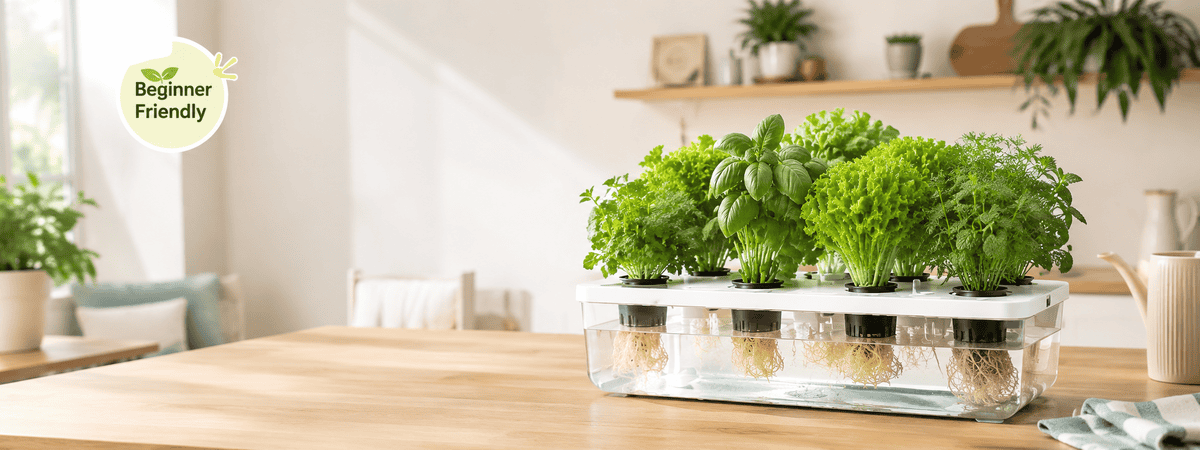
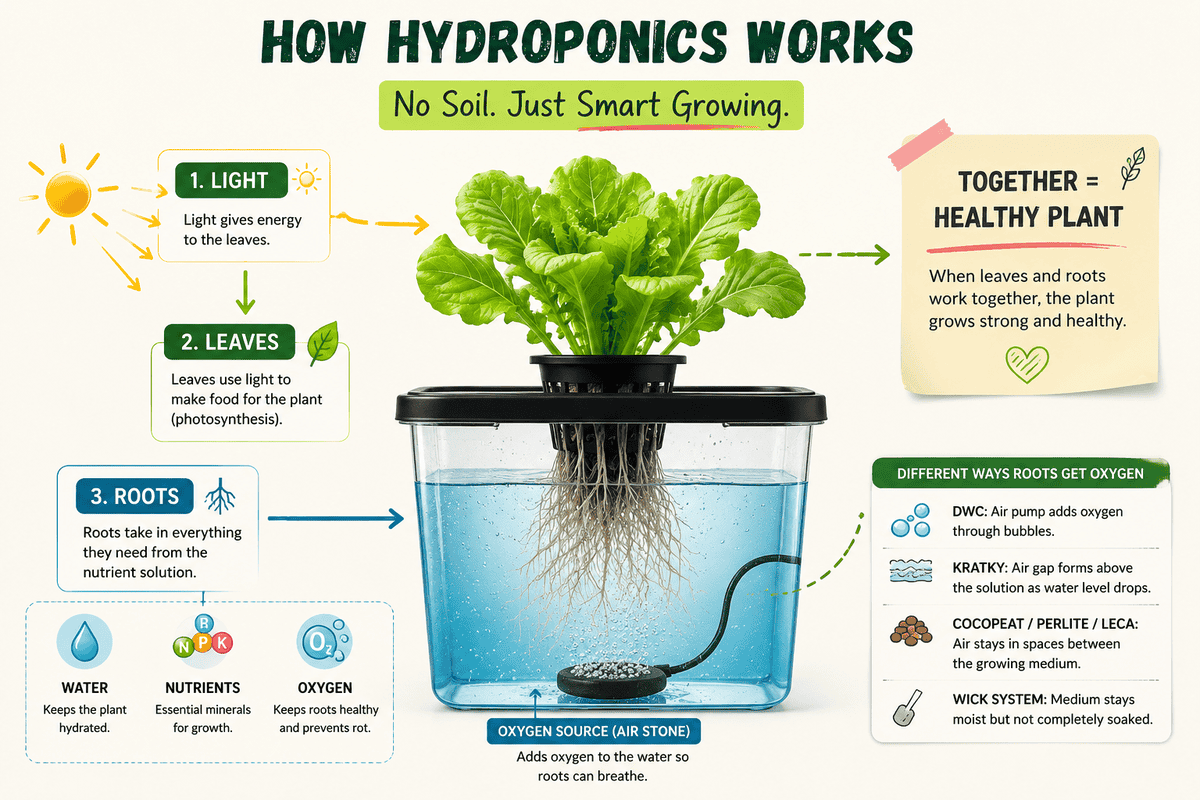
Hydroponics is a way of growing plants without traditional soil. The roots receive water and dissolved nutrients directly, while the plant is supported by a container, net pot or growing medium.
It may sound technical, but a home hydroponic garden can be as simple as one plant growing in a bucket.
So What Does Soil Normally Do?
Soil performs several useful jobs.
It holds the plant upright, stores water, allows air to reach the roots and contains minerals that plants use as food.
Hydroponics replaces these jobs in a more controlled way:
- A net pot or growing medium supports the plant.
- Water is kept in a container or reservoir.
- Hydroponic nutrients provide essential minerals.
- An air gap, air pump or growing medium helps the roots receive oxygen.
- Sunlight or a grow light provides energy.
The plant does not care whether its nutrients came from soil or from water. Its roots absorb nutrients in dissolved mineral form.
This means that when the correct conditions are provided, a plant can grow perfectly well without soil.
What Is Inside Hydroponic Water?
Hydroponic water is not just ordinary water.
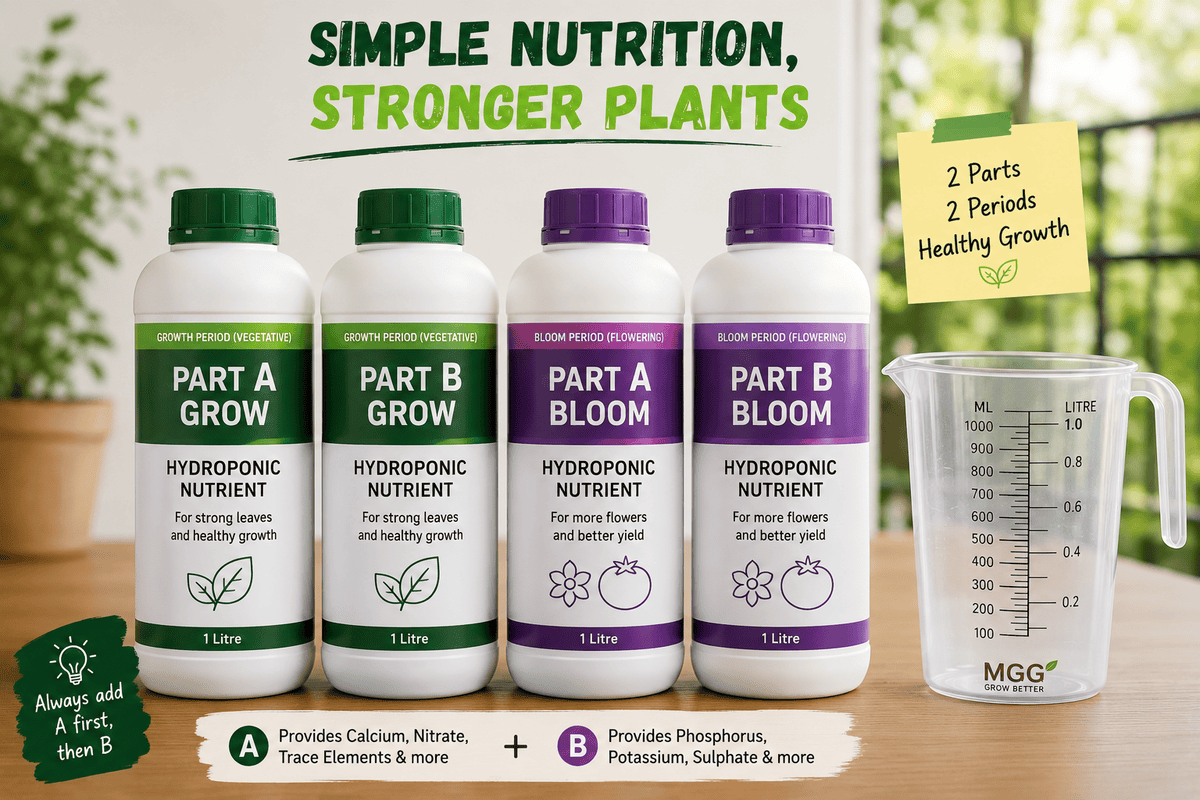
It normally contains a small, carefully measured amount of plant nutrients. These nutrients provide elements such as:
- Nitrogen for leafy growth.
- Phosphorus for roots and flowering.
- Potassium for overall plant strength.
- Calcium and magnesium for healthy development.
- Trace elements needed in very small amounts.
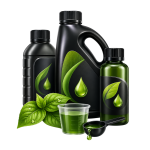
For beginners, the easiest option is usually a ready-made hydroponic nutrient.
Many products come in two bottles called Part A and Part B. The two concentrates are kept separate because some minerals can react with each other when stored in a strong concentrated form.
They are added to water separately and mixed according to the manufacturer’s instructions.
Where Do the Roots Go?
That depends on the type of hydroponic system.
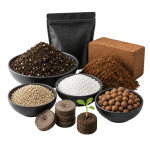
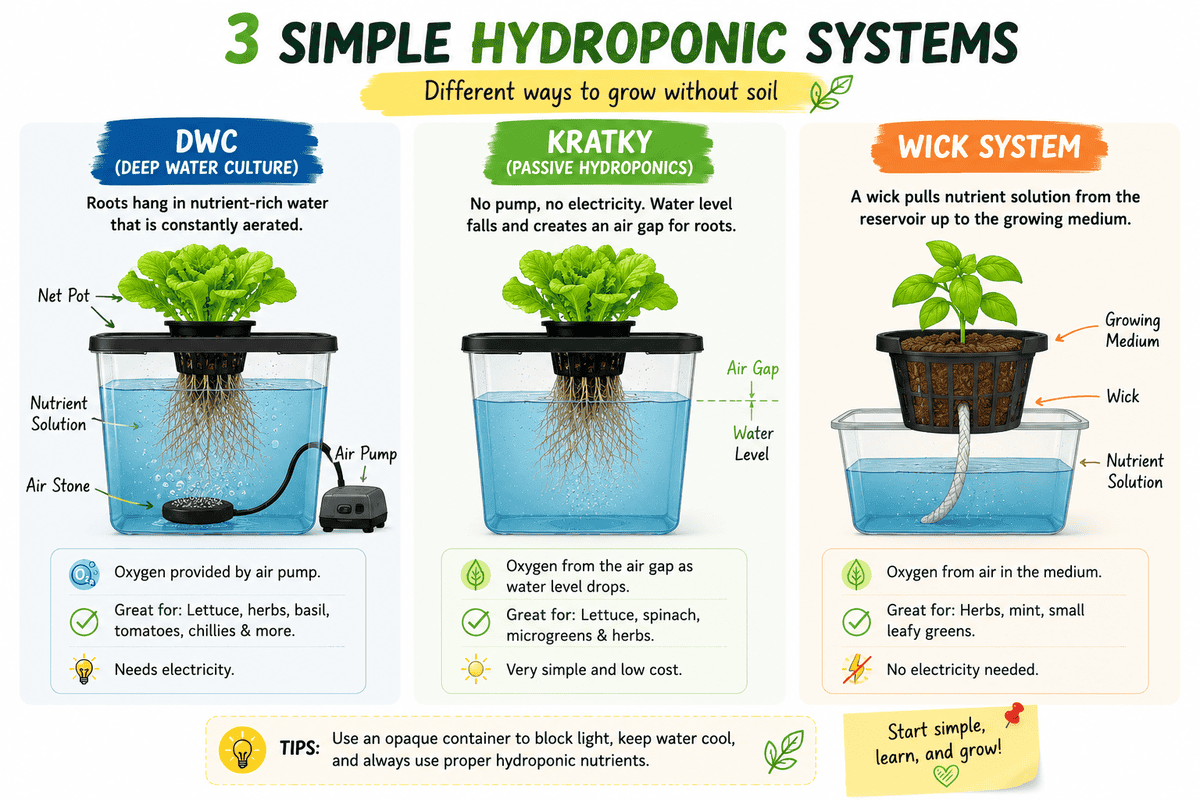
In some systems, the roots hang directly in nutrient-rich water. In others, they grow inside cocopeat, clay pebbles, perlite or another soilless material.
Here are three simple examples.
DWC
DWC means Deep Water Culture.
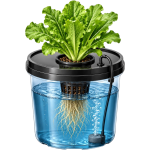
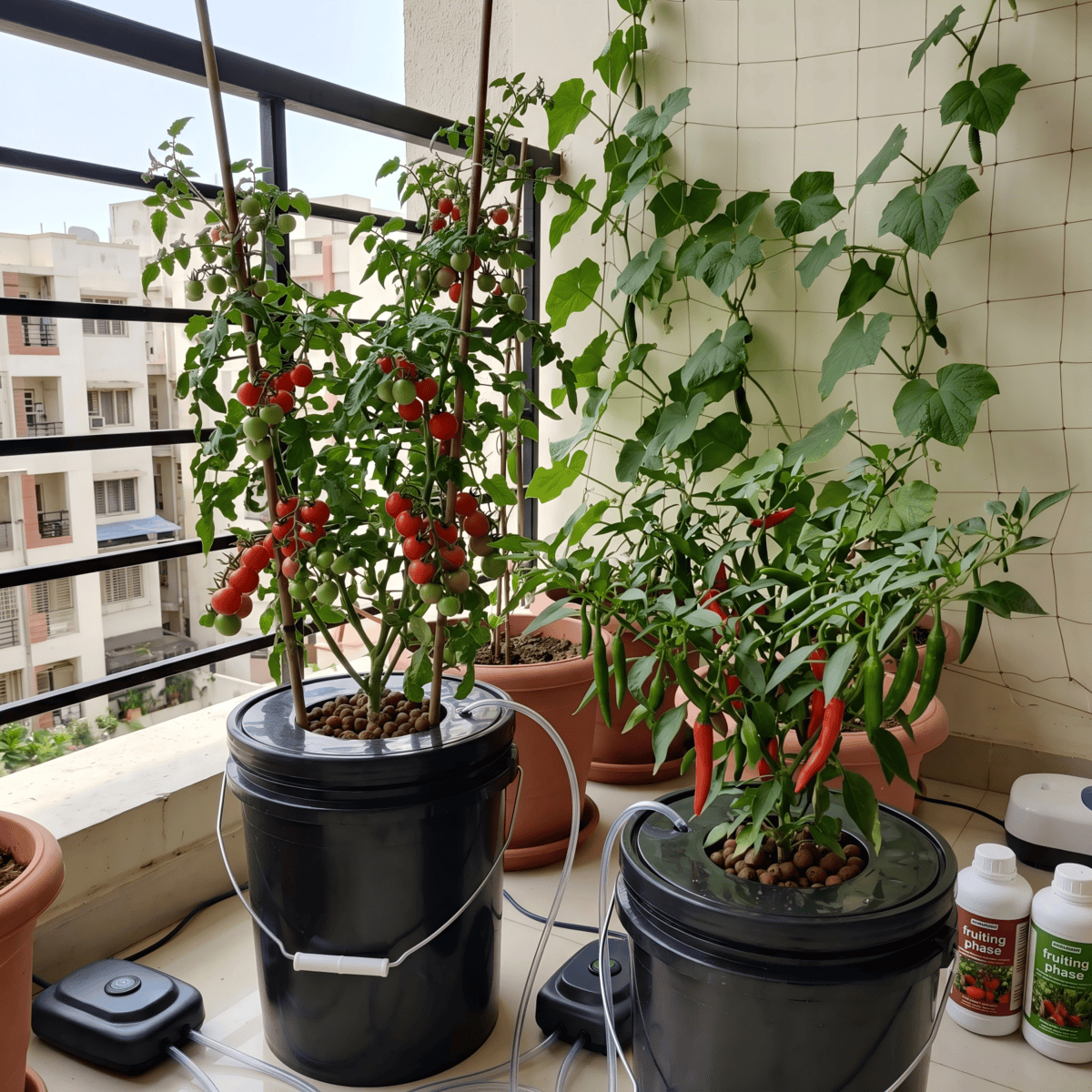
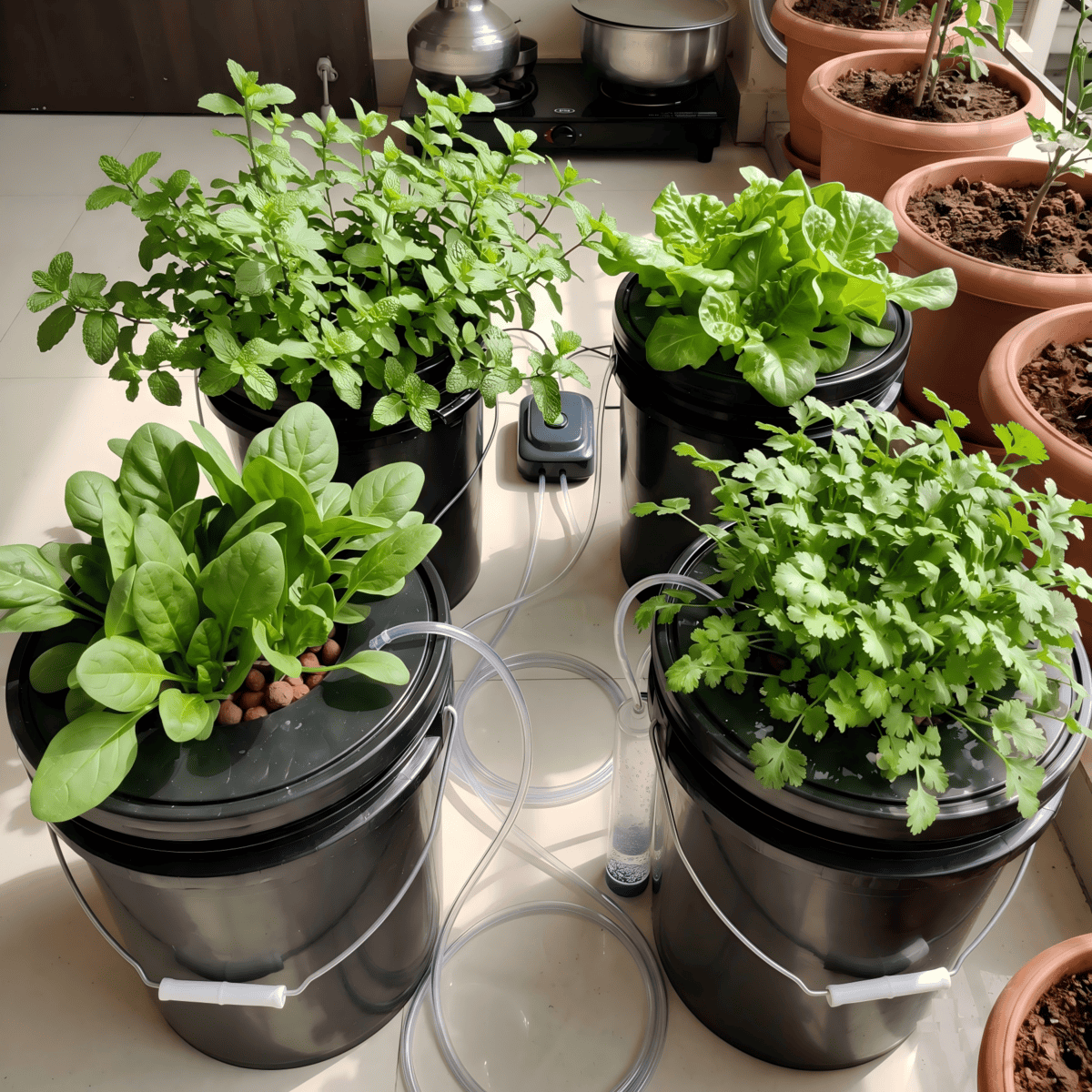
The plant sits in a net pot above a container, while its roots hang into the nutrient solution. An air pump and air stone add oxygen to the water.
DWC is popular for leafy greens, herbs and larger plants such as tomatoes and chillies.
Read next: [DWC Hydroponics at Home — Complete Beginner Setup]
Kratky
The Kratky method is a passive system that does not require an air pump.
The plant begins above a container filled with nutrient solution. As the plant drinks, the water level drops and an air space forms around the upper roots.
It is simple and works especially well for lettuce and other short-cycle leafy greens.
Wick System
A wick system uses a piece of absorbent material to carry water from a reservoir into the growing medium.
It is inexpensive and easy to understand, although it is usually better for small plants that do not consume large amounts of water.
Does Hydroponics Mean Growing Plants Indoors?
Not necessarily.
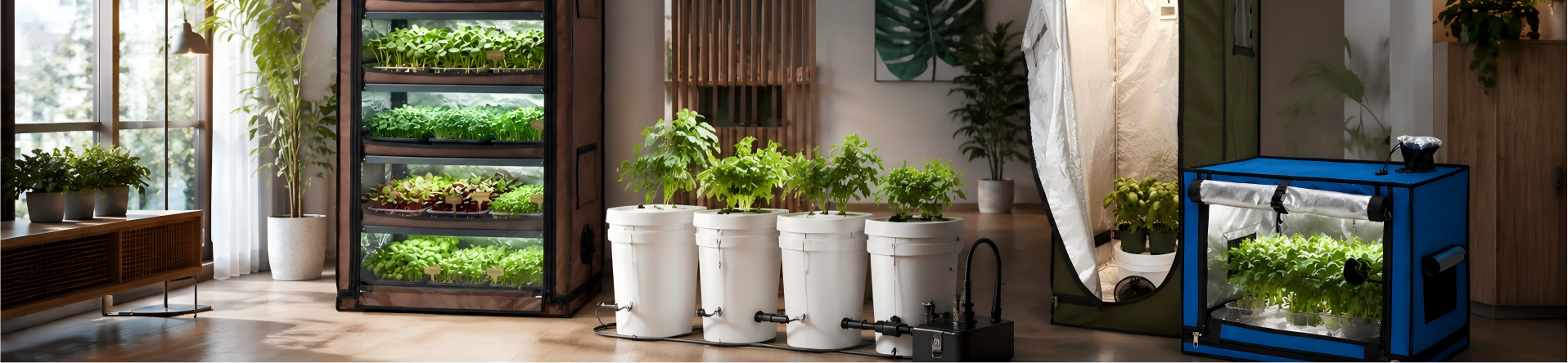
Hydroponics can be used:
- On a balcony.
- On a terrace.
- Near a sunny window.
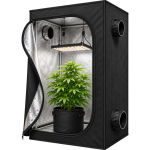
- Inside a grow tent.
- In a greenhouse.
- In a commercial indoor farm.
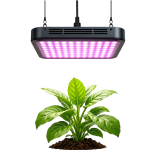
An outdoor system may use natural sunlight, while an indoor system usually needs a grow light.
The best location depends on the plant, the season and the amount of sunlight available.
In India, temperature is also important. A hydroponic container left in direct summer sun can become very hot. It is better to keep the water reservoir shaded and use an opaque container that blocks light.
What Can Beginners Grow?
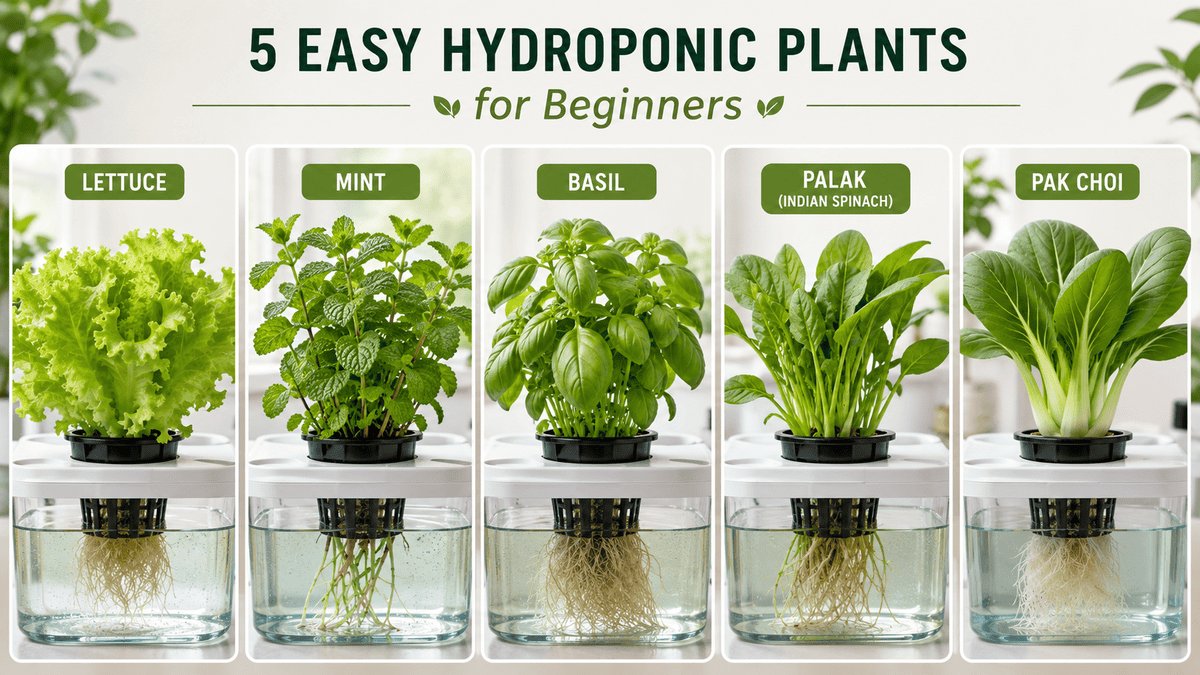
Leafy greens and herbs are generally the easiest place to start.
Good beginner options include:
- Lettuce.
- Basil.
- Mint or pudina.
- Palak.
- Pak choi.
- Methi.
- Coriander during suitable weather.
These plants are relatively compact and usually produce results faster than large fruiting plants.
Tomatoes, cucumbers, chillies and strawberries can also be grown hydroponically, but they need more space, stronger light, better support and closer nutrient management.
Plant guide: [Best Crops to Grow in DWC Hydroponics]
Is Hydroponics Difficult?
Hydroponics can look complicated when you see large systems filled with pipes, pumps and meters.
But you do not need to start with a large system.
A basic home setup may only require:
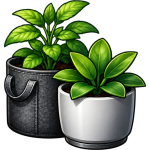
- One opaque container.
- One net pot.
- One young plant.
- Hydroponic nutrients.
- Water.
- A small air pump for DWC.
- Natural sunlight or a grow light.
The important part is starting small.
One healthy plant can teach you how roots grow, how quickly water levels fall and how the plant responds to light and nutrients.
Starting with twenty plants makes every mistake twenty times more expensive.
Is Hydroponics Better Than Soil?
Hydroponics and soil growing both have advantages.
Hydroponics can be cleaner, more compact and easier to control. It is useful for apartments, balconies and places where garden soil is unavailable or inconvenient.
It can also reduce the need for frequent watering because many systems store or recirculate water.
However, hydroponics is not completely automatic.
The grower still needs to monitor:
- Water level.
- Root health.
- Light.
- Temperature.
- Nutrient concentration.
- Water acidity, known as pH.
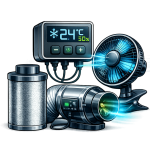
- Pumps and air stones in active systems.
Soil can sometimes protect plants from small mistakes because it acts as a buffer. In hydroponics, changes can affect the roots more quickly.
The advantage is greater control. The responsibility is greater attention.
Three Common Myths About Hydroponics
Myth 1: Hydroponic plants are artificial
The plants are completely real. They use the same natural processes as plants growing in soil, including photosynthesis and nutrient absorption.
Only the way water and nutrients reach the roots is different.
Myth 2: Hydroponics requires expensive equipment
Commercial systems can be expensive, but a beginner system can be built with a simple bucket or container.
It is better to begin with a small reliable setup than to buy a large complicated system immediately.
Myth 3: Hydroponics has no pests or diseases
Removing soil reduces some soil-related problems, but pests can still reach the leaves.
Algae, aphids, mites, fungal problems and root rot can still appear if the system is not kept clean and properly ventilated.
The Simplest Way to Start
For a first experiment, choose one leafy plant and one simple system.
A small DWC bucket is a good option when electricity is reliable. A Kratky container is even simpler because it does not need a pump.
Place the system where the plant receives suitable light, follow the nutrient instructions and check the roots and water level regularly.
Do not worry about building the perfect garden on the first day.
The goal of your first plant is to understand how hydroponics works.
Final Thoughts
Plants can grow without soil because soil is not their food.
Plants need light, water, oxygen, support and dissolved nutrients. Hydroponics simply provides these essentials in a different and more controlled way.
You can begin with one container, one plant and a small amount of equipment. Once you understand the basics, you can expand to more plants, larger systems, grow lights and indoor growing.
The best way to understand hydroponics is not to study every system at once.
Start with one plant and watch what happens.